Ask the Woman Who Owns One! 2025 Packard Spring Fling
Featured Guest, Lyn St. James

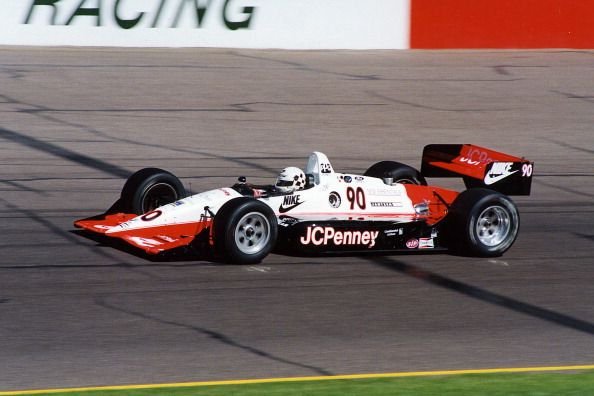
The popular Packard Spring Fling Gala returned on April 25-26 (Friday and Saturday), 2025, at America’s Packard Museum in Dayton, Ohio. This year’s special guest and featured speaker was Lyn St. James, seven-time Indy 500 driver and 1992 Indianapolis 500 Rookie of the Year. Watch the Good Day Dayton interview with Curator Stu Morris about the Packard Spring Fling.
The Spring Fling annual celebration of art, cars, and culture, kicked off with the popular Friday Night Soirée, followed by Saturday informative sessions and tours, and an automotive art show. Saturday evening’s Gala featured David Greer and the Jazz Stompers, amazing live and silent auction items, and more! The live and silent auctions featured exciting excursions, bespoke experiences, automotive art, and other luxury items.
They Weren’t Damsels, They Were Designers.
Marie Luhring
Marie Luhring (1892-1939) was the first female truck designer. Initially, Luhring studied interior design, eventually becoming an animated cartoonist for films then attending school to study industrial and mechanical design. She would graduate as the only woman in her class and became the first female member of the Society of Automotive Engineers. This would lead to Luhring working for Mack Trucks, designing various chassis and engine parts for buses and trucks.
Suzanne Vanderbilt
Suzanne Vanderbilt (1933-1988) was a designer for General Motors (GM) and a member of design chief Harley Earl’s “Damsels of Design.” Earl knew that during the 1950s women were going to have a much bigger voice in purchasing cars and GM needed keen design eyes to remain relevant to buyers. Vanderbilt was one of the ten “damsels,” however when Bill Mitchell took over design at GM, he refused to let women work with him. Vanderbilt was undeterred and became the Chief Designer for Chevrolet interiors in 1972.
Mimi Vandermolen
Mimi Vandermolen (1946-) is a former designer at Ford. Originally laid off in 1974, Vandermolen returned in 1977 to design the interior of the Ford Taurus. She focused on ergonomics and layout by implementing rotary dials for climate controls, seats that battle muscle fatigue, and a digital instrument cluster—revolutionary features that are still used today. Vandermolen challenged her male colleagues to think about female consumers, generating a product that was a Ford staple for decades and changing car design forever.
Paddocks and Podiums
Famous fast femmes who didn’t need a league of their own
Louise Smith
Louise Smith (1916-2006) was often called “The First Lady of Racing” during her career. When Bill France came to South Carolina in his newly formed NASCAR series, he gave Smith the chance to race and she suprised everyone by finishing third. She was a fearless driver, getting 38 wins behind the wheel while breaking nearly every bone in her body from spectacular crashes. Smith retired from driving in 1956, focusing on sponsor talented NASCAR rookies.
Shirley Muldowney
Shirley Muldowney (1940-) is a former competitor in NHRA Top Fuel Dragsters and the first woman to receive a license for the series. Also known as “Cha Cha,” Muldowney faced gender adversity but let her performance do the talking. She would go on to win the 1977, 1980, and 1982 championships becoming the first woman to win a national title and the first person to win three. Muldowney uses her influence to support children in need.
Michèle Mouton
Michèle Mouton (1951-) was a driver in the World Rally Championship (WRC). Mouton gained fame by driving for Audi in their famous Quattro while being the first woman to compete in WRC. She would help win three constructor’s championships for Audi alongside co-driver Fabrizia Pons, making the duo the first only female team. Mouton is credited as an inspiration for today’s young drivers such as Lia Block, daughter of late rally driver Ken Block.
Monisha Kaltenborn
Monisha Kaltenborn (1970-) was a team principal in Formula One (F1), the first woman in the role. Born in India, Kaltenborn studied law in Austria and joined the legal team for Sauber F1, eventually stepping into the role of CEO. She quickly became Sauber’s team principal from 2012 through 2017. Kaltenborn’s leadership position heralded a culture shift in F1, as today’s paddock looks remarkably different than it did just a few decades ago.
Behind the Wheel, Around the World
Early global automobile adventurers
Clärenore Stinnes
Born in Germany, Clärenore Stinnes (1901-1990) became a successful racecar driver in 1924, winning 17 races. In 1927, she decided her next challenge would be traveling the world by automobile. The German car company Adler supplied a brand-new Standard Six sedan with two mechanics and a support truck. With film maker Carl-Axel Söderström to document the trip, Clärenore started and finished in Berlin from May 1927 to June 1929 with the Adler’s odometer reading almost 30,000 miles. After returning to Germany, Carl and Clärenore married and then moved to Sweden in 1930. When asked if she would consider making the trip again at the age of eighty, Clärenore responded: “if I could bring together all the nations of the world I would do it again, despite my age.”
The Adler faced many hardships, particularly in Siberia and South America. The two mechanics that followed Clärenore abandoned the trip before Russia, despite the Adler needing many replacement parts on its journey. With a budget of 100,000 Reichsmarks for the trip ($450,000 today), locals were often employed to assist in the harsh, impassable terrain.
Aloha Wanderwell
Considered to be the first woman to drive around the world by car, Aloha Wanderwell (1906-1996) started her journey by responding to an ad that read “Brains, Beauty & Breeches – World Tour Offer For Lucky Young Woman…. Wanted to join an expedition… Asia, Africa…” While most certainly the norm for the time, Aloha was anything but normal. During the five-year trek from 1922-1927 that started and ended in France, she took on the role of not only driver but translator, and filmmaker. The trip was undertaken with “Thin Lizzy,” a heavily modified Model T that would ingest animal fat for motor oil and bananas for chassis grease in the most remote of areas. Aloha would go on many other journeys around the world and would write a memoir titled “Call to Adventure!” when she settled in Cincinnati.
Canadian born Idris Welsh assumed the name “Aloha” for the journey—and the rest of her days—marrying fellow adventurer Cap Wanderwell in 1925. During the expedition she would drive 500,000 miles, have two children, navigate civil wars, learn to fly planes, and fight in the French Foreign Legion. A film she made contacting the indigenous Brazilian Bororo people remains in the Smithsonian libraries.
Ten and Two, Right in Front of You
Florence Lawrence, inventor of the Turn Signal
Considered to be the first movie star, Florence Lawrence (1886-1938) was also an avid motorist. During the early days of driving automobiles, changing lanes or making a turn was done by hand signals outside the vehicle, a simple method that could be hazardous as cars were difficult to drive. In 1915 Florence had a solution to the problem: an electric switch to operate two flags on the corresponding rear fender, but the design never really caught on and she never patented her idea. It would not be until after her death that the modern turn signal would see widespread use.
Mary Anderson, invented the Windshield Wiper
Mary Anderson (1866-1953) was a rancher and real estate developer. During a trip to New York City in 1902, she recognized that that her cable car driver was having a hard time seeing out his windshield. Seeing how he had to stop to clean the sleet, it gave Mary an idea that would become the first patented windshield wiper. Cadillac would be the first company to have wipers as standard equipment shortly after her patent expired in 1922, yet Mary never profited or given credit for her invention.
Katherine Blodgett, developed invisible glass
Katherine Blodgett (1898-1972) worked as a researcher for General Electric, their first female scientist after becoming the first woman to earn a Ph.D. in physics at Cambridge University. She applied her skills to make the world’s first invisible glass by adding multiple layers of film—one molecule thick—virtually eliminating all light reflected from its surface. Today this process is used in all types of industries, from camera and eye-glass lenses to windshields on automobiles.
About America’s Packard Museum
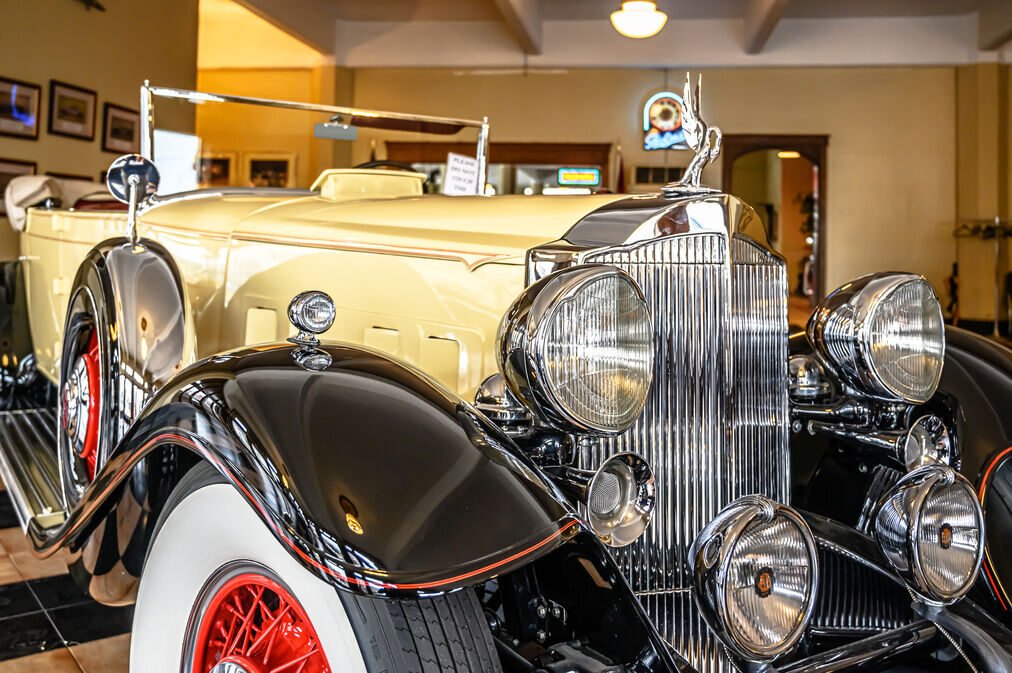
The Museum is in an original Packard dealership which was operational from 1917 until 1947. Rogers Pontiac and Davis Buick used the facility as a dealership from 1947 until the 1970’s. From the 1970’s until 1991, Genuine Auto Parts owned the building and used it as a car parts store. In 1991, Robert Signom II bought and restored the property as The Citizen’s Motorcar Company, opening as America’s Packard Museum the following year. The collection is a carefully curated gathering of prime examples from the company’s sixty-year history, each chosen to tell a particular story. From 1899-1956, the Packard Motor Company built 1.6 million cars, and collectors estimate only about 10,000 still exist. The Museum manages the largest public collection of Packard automobiles and memorabilia. The mission of America’s Packard Museum is to educate present and future generations about the Packard Motor Car Company, its products, and philosophies. Be sure to follow us on Facebook and Instagram.