
One of a Kind: 1952 Parisian Coupe by Pinin Farina
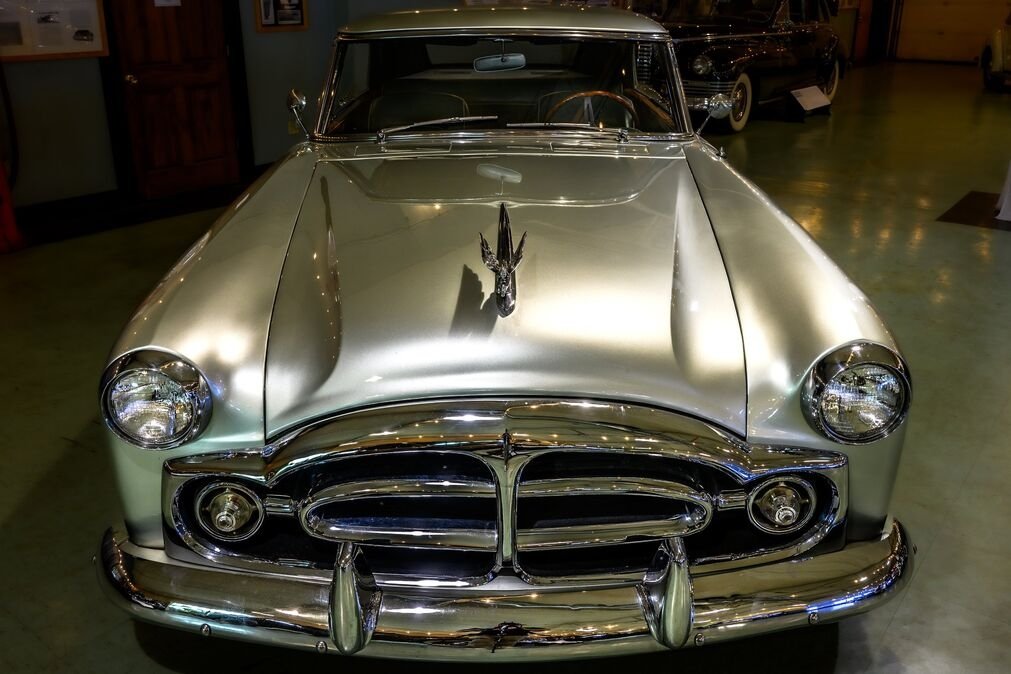
Carrozeria Pinin Farina was founded in Turin, Italy in 1930 and its factory was bombed by the Allies during World War Two. Defying the Italian ban on participation in post-war automobile shows, Pinin Farina received international acclaim in Paris for their custom bodied Alfa Romeos and Lancias. When a Pinin Farina designed Cisitalia received transatlantic acclaim with its inclusion in the Museum of Modern Art’s “Eight Automobiles” exhibition in 1951, American automotive manufacturers began to take notice, most notably Nash. Pinin Farina designed this Packard 1952 Parisan Coupe by Pinin Farina but it was never built.
In 1995, renowned car collector Carl Schneider obtained the original plans and custom built this Packard Parisan Coupe by Pinin Farina to its exacting specifications.
1952 Parisian Coupe by Pinin Farina
327 cu. in. straight eight. 150 BHP @ 3600 rpm. 3 speed manual transmission. 4 wheel hydraulic drum brakes. 127” Wheelbase. Curb weight 4,000 lbs. Prototype, not commercially sold.
In 1952…
Puerto Rico becomes a Commonwealth of the United States.
The longest running play in history, “The Mousetrap” by Agatha Christie, opens in London.
The United Nations headquarters, designed by Le Corbusier, opens in New York.
Cost of a house: $8,500.
Average Income: $3,850.
Gallon of Gas: $0.27.
Average New Car: $1,500.
Founded by Battista “Pinin” Farina, Pininfarina has become one of Italy’s most iconic coachbuilders, renowned for its timeless designs and technical innovation in the automotive industry. From its humble beginnings in the early 20th century, Pininfarina’s journey reflects a blend of artisanal craftsmanship and industrial ambition, positioning the company as a leader in luxury automobile design. The company’s establishment was made possible through financial backing from his wife’s wealthy aunt, a widow, and his great friend Vincenzo Lancia, another legend in the automotive world. Farina’s vision was clear: to create a coachbuilding company that combined artisanal craftsmanship with industrial efficiency. Initially employing 150 workers at a 9,250-square-meter facility on Corso Trapani, the company specialized in crafting custom bodies for individual clients and small production series, aiming to produce 7-8 vehicles per day.